
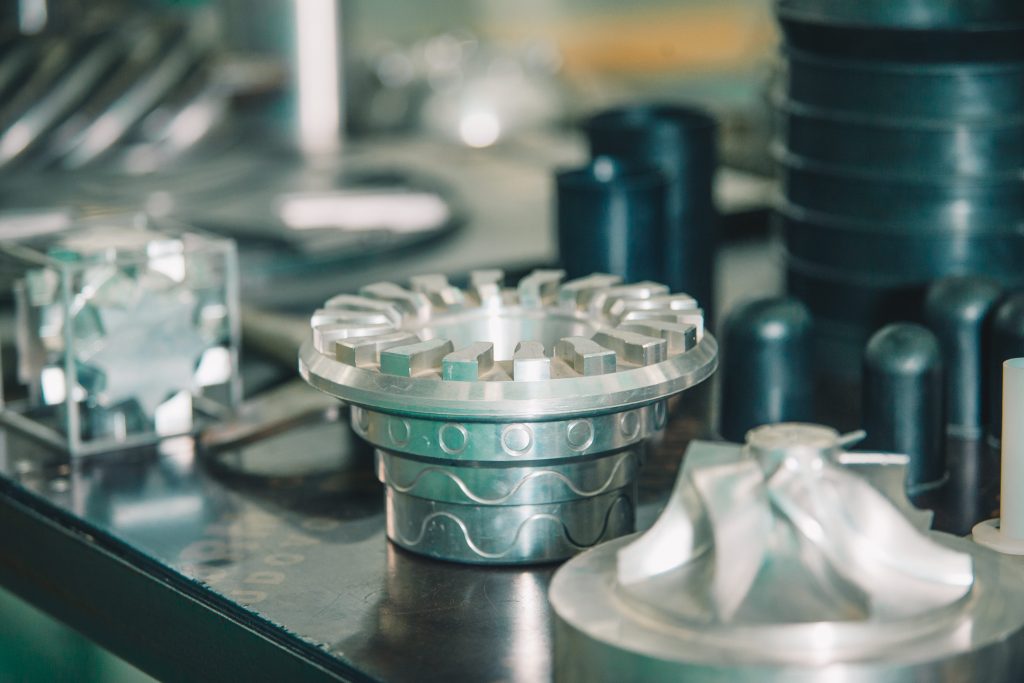
Metal additive manufacturing has moved from “interesting prototype” to a credible production route for high-value components where geometry, performance, or lead time drives the decision. Instead of cutting material away like subtractive manufacturing, it builds parts directly from digital data, opening the door to internal flow paths, consolidated assemblies, and shapes that are difficult to produce with traditional manufacturing.
What is Metal Additive Manufacturing (AM)?
At its core, metal AM is an additive manufacturing process that produces metal parts from a 3d model by building material layer by layer, often to near-full density depending on the technology and post-processing route. The feedstock is usually metal powder or wire, and the part is created using a controlled energy source or a binding route followed by densification.
The key point for manufacturers is that AM is not one single method. It is a set of additive manufacturing technologies with different constraints on accuracy, build rate, and mechanical performance. That is why the “right” choice depends on the part’s function, material, inspection requirements, and the post-processing plan.
How the process works in practice
Most production workflows follow the same high-level steps:
- Design for Additive Manufacturing (DfAM): Geometry is adapted for printability, support strategy, heat flow, and post-processing.
- Build preparation: The job is oriented, supports are generated, and process parameters are set.
- Build: The machine creates near-net-shape geometry using a selected AM method.
- Post-processing: Supports are removed, heat treatment is applied, and critical surfaces are machined where needed.
- Inspection and qualification: Dimensional verification and material checks confirm conformance.
This end-to-end view matters because the final cost and quality are usually determined as much by finishing and verification as by the build itself.
Core technologies to know
Powder bed fusion
Powder bed fusion is the most recognized metal AM family for high-detail parts. It spreads thin layers of powder and selectively fuses regions to create a fully defined component.
- Laser Powder Bed Fusion (LPBF): Laser powder bed fusion is widely used when fine features, high density, and repeatable detail matter.
- Direct metal laser sintering: Direct metal laser sintering (DMLS) is widely used in industry to refer to laser-based powder bed fusion, even though the process typically involves full melting rather than true sintering. In practice, DMLS is often discussed interchangeably with LPBF in procurement and commercial contexts.
- Electron beam: Electron-beam PBF uses an electron beam in vacuum, and it is commonly associated with reactive materials such as titanium.
Directed energy deposition
Directed energy deposition feeds powder or wire into an energy zone to add material as it is deposited, making it useful for repairs, feature addition, and larger near-net builds where powder-bed size is limiting.
Binder-based routes
Some systems form a “green” part with a binder and then densify it through furnace cycles. In these routes, dimensional control must account for shrinkage as the part is densified through debinding and sinter cycles, and achieving near-full density may require optimized sintering profiles and, in some applications, additional densification such as HIP.
Materials, properties, and what drives performance
Metal AM supports a range of materials, but process choice often dictates what is practical and qualified. Common production alloys include stainless steels, tool steels, aluminum alloys (application dependent), cobalt-chrome, and nickel superalloys such as inconel 718.
Because parts are created through rapid thermal cycles, process settings influence microstructure and mechanical properties. This is why parameter stability, powder handling discipline, and heat treatment are essential for consistent outcomes, especially in regulated environments.
Where metal AM delivers real value
Metal AM is strongest when it changes the engineering economics, not when it simply replaces machining without a design advantage.
- Complex parts and consolidation: Printing can combine multiple components into one, reducing assembly time and leak paths.
- Internal channels and thermal performance: Conformal channels and optimized flow paths can improve cooling and reduce pressure drop.
- Reduced material waste: Compared with machining large billets for small finished parts, near-net builds can lower scrap and improve material utilization.
- Digital manufacturing and faster iteration: Design changes can be implemented without new casting tools, enabling shorter development cycles.
Limitations to plan for
Metal AM is powerful, but it comes with realities that should be addressed early:
- Surface finish: As-built surfaces are typically rougher than machined surfaces, so critical interfaces often require finishing.
- Distortion and residual stress can occur because of thermal gradients, making stress relief common.
- Support removal, heat treatment, and machining are frequently required for production parts.
- Qualification and inspection effort can be significant for safety-critical applications.
Applications across industries
Metal AM is now used across multiple sectors, with adoption often led by value per part and performance requirements.
- Aerospace: lightweight brackets, ducting, heat exchangers, and consolidated assemblies.
- Energy and turbomachinery: flow-optimized components and thermal hardware.
- Medical: implants and porous structures designed for biological integration.
- Tooling: conformal-cooled inserts and custom manufacturing tools.
- Automotive (selected use cases): low-volume performance parts and rapid iteration.
How to choose the right route and the right partner
Start with the business objective: are you targeting consolidation, thermal performance, weight reduction, lead time, or repair? Then validate the route against material availability, inspection needs, and the finishing plan.
Finally, evaluate your supplier the way you would evaluate any critical manufacturing partner: process stability, traceability, documented parameters, post-processing capability, and inspection infrastructure. For demanding applications, the strongest results come from an integrated route where AM, heat treatment, machining, and verification are engineered as one system.
Conclusion
Metal additive manufacturing is most effective when it is selected for design-driven advantage rather than novelty. The technologies can produce high-value components that are difficult to manufacture conventionally, but success depends on DfAM discipline, post-processing, and verification. When the material, method, and workflow are matched to the application, AM can reduce assembly complexity, improve functional performance, and shorten development cycles. For many manufacturers, the best route is hybrid, printing near-net shapes and machining critical surfaces for final tolerance and finish.