
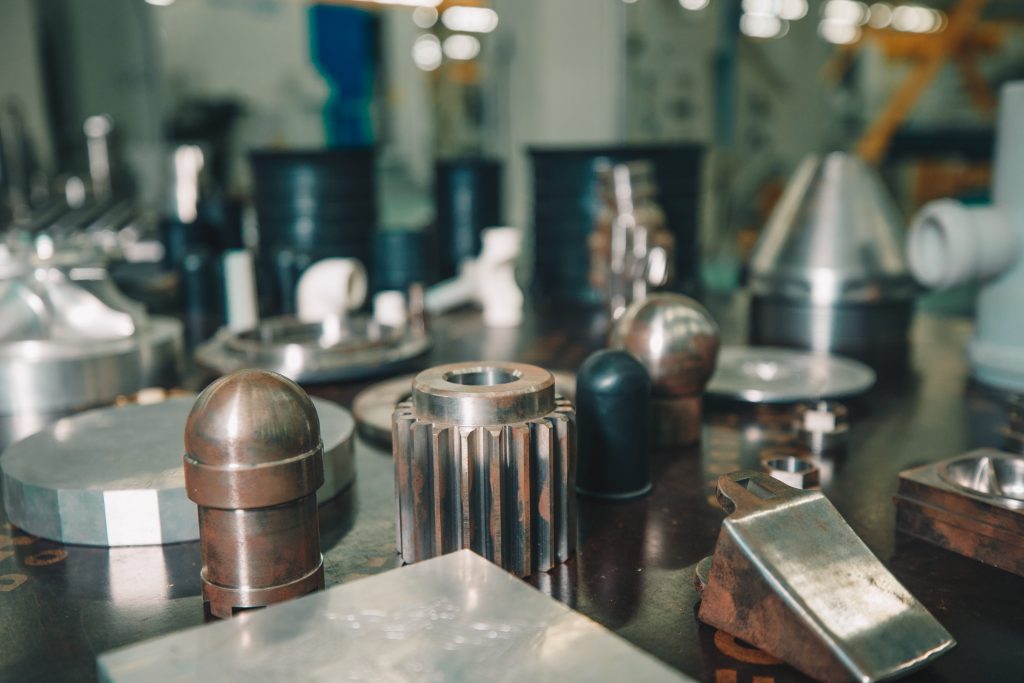
A lathe is a core machine tool in modern manufacturing, used to produce precise cylindrical parts and profiles with reliable accuracy and repeatability. Whether you are running a manual engine lathe in a toolroom or a CNC turning center in production, the fundamentals are the same: the workpiece rotates, and a cutting tool removes material to create diameters, faces, tapers, bores, grooves, and threads.
To operate a lathe safely, troubleshoot problems quickly, and choose the right machine for your work, you need to understand the main lathe parts and what each component does. This guide breaks down the key components of a lathe machine, explains their function in plain language, and highlights the parts that matter most for accuracy, rigidity, surface finish, and productivity. If you maintain legacy equipment, it also helps when sourcing spare parts from a trusted supplier, especially for popular workshop brands such as Myford, Colchester, and Warco in the UK.
Core structural parts of a lathe
Bed
The bed is the foundation of the lathe. It is the rigid base that supports the headstock, tailstock, and carriage, and it maintains alignment along the machine’s length. Most lathe beds use hardened and ground ways to provide smooth, stable movement and long-term wear resistance.
Why it matters: bed rigidity and way quality influence accuracy, taper control, and surface finish. A stable bed helps the machine resist vibration and deflection when cutting forces rise.
Ways (guideways)
Ways are precision tracks on the bed that guide the carriage and tailstock. Depending on the machine, these may be flat ways, V-ways, box ways, or linear guideways.
Why it matters: the condition and geometry of the ways affect straightness, repeatability, and the lathe’s ability to hold tolerance over long travels.
Base and leveling system
The base supports the bed and absorbs vibration. Leveling feet or mounts help distribute load and maintain geometry.
Why it matters: improper leveling can introduce twist, affecting alignment and causing taper issues on turned parts.
Headstock and rotation system
Headstock
The headstock is the housing at the drive end of the machine that contains the spindle system and often the main drive elements. It provides the power and structural support needed to rotate the workpiece under cutting load.
Why it matters: headstock stiffness and thermal behavior strongly influence surface finish and dimensional stability, especially on long runs.
Spindle
The spindle is the rotating shaft that drives the workholding device, typically a chuck or collet. It is supported by precision bearings and designed to handle radial and axial cutting forces.
Why it matters: spindle bearing quality, preload, and stiffness influence runout, vibration resistance, and achievable surface finish.
Spindle bearings
Spindle bearings support the spindle and control runout. They are a major factor in accuracy and stability.
Why it matters: worn or overheated bearings can cause chatter, poor finish, and dimensional drift.
Drive system (motor, belts, gearbox)
Lathes rotate the spindle using a motor and transmission system. Manual machines may use belts and a speed-change gearbox. CNC lathes commonly use servo spindle drives with programmable speed control. On many manual lathes, the drive belt is a simple but critical component that should be inspected regularly for wear and tension.
Why it matters: torque delivery at cutting speed is essential for stable roughing and consistent chip formation.
Workholding and part support
Chuck
A chuck clamps the workpiece to the spindle. Common types include 3-jaw self-centering chucks, 4-jaw independent chucks, and power chucks on CNC turning centers.
Why it matters: workholding is often the limiting factor for accuracy. Poor chuck condition, incorrect jaw setup, or excessive clamping pressure can cause runout or part distortion.
Collet system
Collets are used for high-precision, high-repeatability clamping, especially for bar work and smaller diameters.
Why it matters: collets often provide better concentricity than standard chucks and can improve surface finish and cycle time in bar-fed production.
Faceplate
A faceplate mounts irregularly shaped parts that cannot be held in a chuck. It uses clamps, straps, or custom fixtures.
Why it matters: it expands the lathe’s capability for repair, prototyping, and odd-shape turning.
Tailstock
The tailstock supports the free end of a long workpiece and can hold a center, drill chuck, or other tooling. It slides on the ways and locks in position. Many tailstocks accept centers and tooling with a Morse taper, which helps locate tools accurately while allowing quick changeover.
Why it matters: tailstock alignment affects taper and concentricity. Proper support reduces deflection on shafts and improves finish.
Centers (live and dead centers)
Centers support the workpiece during turning. A live center rotates with the work, while a dead center remains stationary.
Why it matters: correct center selection and lubrication prevent heat and improve accuracy on long parts.
Steady rest and follow rest
A steady rest supports a workpiece at a fixed point along its length. A follow rest supports the part close to the cutting zone and moves with the carriage.
Why it matters: these supports prevent vibration and deflection on long, slender parts.
Carriage and tool movement system
Carriage
The carriage is the main assembly that moves the cutting tool along the bed. It carries the cross-slide, compound rest (on many manual lathes), and toolholding system.
Why it matters: carriage rigidity and smooth travel influence surface finish and dimensional consistency.
Saddle
The saddle is the portion of the carriage that rides on the bed ways. It supports the cross-slide and tool system.
Why it matters: wear on saddle contact surfaces can reduce accuracy and create chatter.
Cross-slide
The cross-slide provides tool movement perpendicular to the spindle axis. It is used for facing, turning diameters, and controlled tool positioning.
Why it matters: backlash and slide stiffness affect dimensional control, especially during finishing.
Compound rest (compound slide)
On manual lathes, the compound rest provides angular movement for cutting tapers and fine adjustments. It also supports threading and form tool positioning.
Why it matters: it adds flexibility for toolroom work, but it can be less rigid than the main slides under heavy load.
Tool post
The tool post holds the cutting tool on a manual lathe. Quick-change tool posts improve setup speed and repeatability, and many shops standardize toolholders so a single 10mm shank tool setup can be repeated across jobs.
Why it matters: tool rigidity and repeatability affect chatter resistance and surface finish.
Apron
The apron is the front part of the carriage that contains feed controls, clutches, and mechanisms that engage the lead screw or feed rod.
Why it matters: the apron manages smooth, controlled movement during turning and threading operations.
Feed and threading system
Lead screw
The lead screw drives the carriage for threading. It provides precise synchronization between spindle rotation and tool movement.
Why it matters: lead screw condition influences thread accuracy and repeatability.
Feed rod
The feed rod transmits power for automatic feeds during turning and facing, separate from the lead screw on many machines.
Why it matters: separating feed rod and lead screw reduces wear on the lead screw, protecting threading accuracy.
Quick-change gearbox
A quick-change gearbox allows the operator to select feed rates and thread pitches without changing gears manually.
Why it matters: it improves productivity and reduces setup errors during threading work.
Half-nuts
Half-nuts engage the lead screw during threading. When engaged, the carriage moves in precise relation to spindle rotation.
Why it matters: worn half-nuts can cause inaccurate threads.
CNC lathe-specific components
Turret
A CNC turret indexes multiple tools into position automatically. It enables fast tool changes during a program.
Why it matters: turret rigidity, indexing accuracy, and clamping reliability affect repeatability and finish across operations.
CNC control (controller)
The CNC controller runs the program, coordinates axes, manages spindle control, and handles tool offsets and cycles. Controls vary by model and version, but the best ones make setup and troubleshooting easier with clear diagnostics.
Why it matters: control features influence productivity, surface finish quality, and how easily the machine integrates with probing and automation.
Ball screws and linear guides
Most CNC lathes use ball screws and guide systems to achieve precise, repeatable axis movement.
Why it matters: backlash control and smooth motion affect tolerance holding, especially on interpolation and contouring.
Servo motors and encoders
Servo motors drive axes and the spindle. Encoders provide position feedback for accuracy and repeatability.
Why it matters: stable servo performance improves finish, reduces following error, and supports consistent cycle time.
Hydraulic system
Many CNC lathes use hydraulics for chuck clamping, tailstock movement, and turret clamping.
Why it matters: hydraulic stability affects clamping consistency and safety.
Coolant system
Coolant systems deliver cutting fluid to control heat, improve tool life, and evacuate chips.
Why it matters: coolant delivery affects tool wear, surface finish, and chip control, especially in deep bores and threading.
Chip conveyor and chip management
Chip conveyors remove chips from the cutting area and reduce manual cleaning.
Why it matters: reliable chip flow supports automation and prevents recutting, which can damage tools and surfaces.
Sub-spindle (secondary spindle)
Some CNC turning centers include a sub-spindle to transfer the part and machine the back side without manual intervention.
Why it matters: it reduces handling, improves feature-to-feature accuracy, and supports complete machining in one cycle.
Live tooling and C-axis
Live tooling allows rotating tools for milling and drilling features. A C-axis enables spindle positioning and synchronization.
Why it matters: this expands a lathe into a multi-tasking platform, reducing secondary operations and lead time.
Safety and guarding parts
Modern lathes include guarding, door interlocks, emergency stops, and chip shields.
Why it matters: turning creates high-energy chips and rotating hazards. Proper guarding and safe operation procedures protect people and equipment.
Conclusion
Understanding lathe parts is the fastest way to operate turning equipment more effectively, whether you are troubleshooting finish issues, planning maintenance, or selecting a new machine. The bed and ways provide alignment and rigidity, the headstock and spindle deliver stable rotation, and the carriage system positions the tool with control. Workholding, support, and feed mechanisms define accuracy and repeatability just as much as the machine’s headline specs. When you need replacements, prioritize quality components that fit your machine’s standard interfaces and protect alignment over time, whether you are maintaining small lathes for hobby use or supporting production equipment that must stay reliable day after day.