
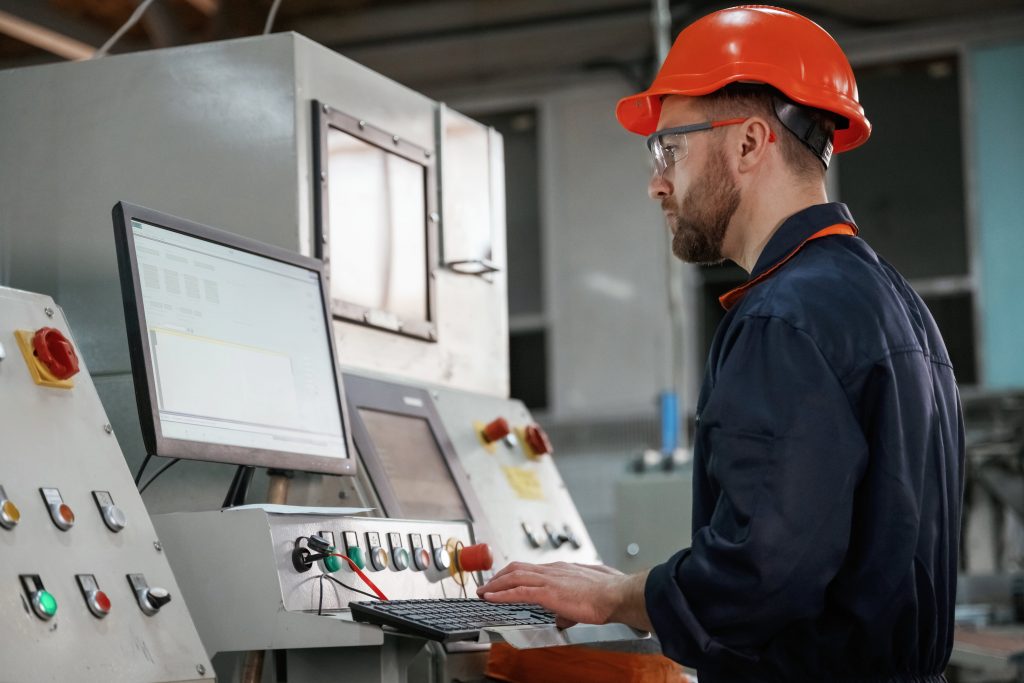
Additive manufacturing represents one of the most transformative advancements in modern production technology. It enables greater design flexibility, faster prototyping, and the creation of highly complex geometries that were once impossible to produce. As the technology continues to mature, additive manufacturing is increasingly shaping the future of how products are designed, customized, and manufactured across industries. Learn everything you need to know about this manufacturing method in this comprehensive article.
What is additive manufacturing?
Additive manufacturing, often referred to as 3D printing, is a process of creating three-dimensional objects by building them layer by layer from digital models. Unlike traditional subtractive methods—such as milling or turning—that remove material to shape a part, additive manufacturing adds material only where needed. This approach minimizes waste, enables highly complex geometries, and allows for rapid iteration from design to finished product.
The process begins with a 3D digital design created using CAD (computer-aided design) software. This model is then converted into a file format (usually STL or AMF) that the machine reads to deposit material layer by layer. Depending on the technology, the material may be a thermoplastic filament, metal powder, resin, or composite. As each layer solidifies or fuses in the additive manufacturing process, the object gradually takes form, resulting in a precise physical representation of the digital design.
How additive manufacturing works
The workflow of additive manufacturing can be broken down into several key stages:
- Design and modeling – The part is created digitally in CAD software, where engineers define its geometry, dimensions, and functional features. The 3D model is then converted into a printable format (such as STL or AMF) and sliced into hundreds or thousands of thin layers, each representing a cross-section of the final object. This sliced data provides precise instructions for how the printer will build the part layer by layer. Advanced simulation tools may also be used at this stage to optimize orientation, support structures, and material usage before printing begins.
- Material preparation – Depending on the chosen additive manufacturing technology, materials such as polymers, metals, ceramics, or composites are prepared in specific forms—filaments for extrusion systems, powders for laser-based processes, or resins for photopolymerization. The quality and consistency of these materials are critical for achieving uniform layer adhesion and mechanical strength. Environmental conditions such as humidity, temperature, and cleanliness are also carefully controlled to prevent defects during printing.
- Printing process – The 3D printer deposits or fuses material one layer at a time, following the sliced model’s digital instructions. The machine’s print head or laser moves precisely along programmed paths, solidifying or bonding each layer to the one below. Depending on the technology, material deposition can occur through extrusion, melting, curing, or sintering. Layer thickness, print speed, and energy input are fine-tuned to balance build time with resolution and surface quality, ensuring the part meets its dimensional and structural requirements.
- Post-processing – Once printing is complete, parts often require additional finishing to achieve desired surface quality and strength. This may include removing support structures, cleaning excess powder or resin, and applying heat treatment to relieve internal stresses. For metal parts, sintering or CNC machining is commonly used to enhance density and achieve tight tolerances. In industrial applications, post-processing also includes inspection, polishing, coating, or painting to prepare parts for end use or assembly.
Types of additive manufacturing technologies
- Fused Deposition Modeling (FDM) – This process involves feeding a thermoplastic filament—such as ABS, PLA, or nylon—into a heated extrusion nozzle, which deposits the material layer by layer onto a build platform. The melted filament solidifies as it cools, forming the object’s structure. FDM is one of the most widely used additive manufacturing methods due to its simplicity, low cost, and accessibility. It’s ideal for prototyping, functional testing, and small-scale production, though surface finish and dimensional accuracy can depend on layer resolution and post-processing. Industrial-grade FDM machines now support high-performance materials like PEEK and carbon-fiber composites for demanding engineering applications.
- Stereolithography (SLA) – SLA uses a focused UV laser to selectively cure liquid photopolymer resin into solid layers within a vat. As each layer hardens, the build platform moves to allow the next layer to form on top. This process achieves extremely fine resolution and smooth surface finishes, making it popular for dental models, medical prototypes, and precision molds. Because SLA parts are created from photosensitive resins, post-curing under UV light is often required to achieve full mechanical strength. Its ability to capture intricate details and thin walls makes it one of the most accurate additive manufacturing methods available.
- Selective Laser Sintering (SLS) – SLS uses a high-powered laser to fuse powdered polymers—typically nylon (PA), TPU, or composite blends—into solid structures layer by layer. The unsintered powder surrounding the part acts as a natural support, eliminating the need for additional fixtures and allowing the creation of complex internal geometries. SLS produces strong, functional components suitable for end-use applications and is widely used in aerospace, automotive, and consumer goods manufacturing. Post-processing steps, such as bead blasting or dyeing, are often applied to improve surface finish and appearance.
- Direct Metal Laser Sintering (DMLS) / Selective Laser Melting (SLM) – Both technologies use powerful lasers to fuse fine metal powders—such as titanium, stainless steel, Inconel, or aluminum—into dense, fully functional parts. The key difference lies in process intensity: SLM fully melts the powder, while DMLS sinters it below melting temperature. These methods enable the production of complex, high-strength components with excellent mechanical properties, often surpassing those of cast metals. DMLS and SLM are essential for industries where strength, precision, and lightweighting are critical—particularly in aerospace, medical implants, and high-performance automotive engineering.
- Binder Jetting – This process involves depositing a liquid binding agent onto a bed of powdered material (metal, sand, or ceramic), layer by layer, to form the desired shape. After printing, the “green” part is cured to harden the binder and then sintered in a furnace to increase density and strength. Binder jetting allows for fast, large-scale production and is capable of producing parts with intricate geometries and smooth surfaces. It’s commonly used for metal parts, casting molds, and full-color prototypes. Compared to laser-based systems, binder jetting is more cost-effective and scalable for batch manufacturing.
- Material Jetting – Material jetting functions similarly to an inkjet printer, depositing droplets of photopolymer or wax material layer by layer, which are immediately cured with UV light. This technology can print multiple materials and colors simultaneously, making it ideal for realistic prototypes, dental models, and custom consumer products. The resulting parts have excellent dimensional accuracy and surface quality, requiring minimal finishing. However, the materials are generally limited to polymers and resins, which may restrict use in high-stress or high-temperature applications.
Benefits of additive manufacturing
- Design freedom – Enables the creation of complex geometries, internal channels, and lightweight lattice structures that are impossible with conventional machining. Engineers can design parts for optimal performance rather than manufacturability, integrating multiple functions into a single component. This flexibility encourages innovation and allows for topological optimization—reducing material use while maintaining structural integrity.
- Material efficiency – Produces minimal waste by using only the material required to build the part, unlike subtractive processes that remove excess material from a solid block. This efficiency not only lowers material costs but also supports sustainability by reducing scrap and energy consumption. In metal additive manufacturing, unused powder can often be recycled and reused, further minimizing waste.
- Customization – Allows easy design modification for personalized products, from medical implants to consumer goods. Because each item is digitally designed, unique geometries or dimensions can be produced without additional tooling costs. This makes additive manufacturing ideal for bespoke medical devices, dental restorations, and customized lifestyle products.
- Rapid prototyping – Greatly reduces development cycles by enabling fast design iterations and on-demand part production. Designers can quickly move from digital concept to physical prototype within hours, testing functionality, ergonomics, and aesthetics before committing to full-scale manufacturing. This accelerates innovation and shortens time-to-market for new products.
- Supply chain simplification – Eliminates the need for tooling, molds, and large inventories, allowing decentralized or on-site production. Manufacturers can produce spare parts or replacements directly from digital files, reducing lead times and logistics costs. This digital approach to manufacturing supports agile production strategies and mitigates supply chain disruptions.
- Lightweighting and performance – Optimized geometries reduce weight without sacrificing strength, ideal for aerospace and automotive industries. By strategically reinforcing high-stress areas and hollowing out low-load zones, additive manufacturing achieves superior strength-to-weight ratios. This not only enhances fuel efficiency and performance but also contributes to sustainability through reduced material usage.
Applications of additive manufacturing
- Aerospace – Producing lightweight structural components, fuel nozzles, and engine brackets that reduce aircraft weight and improve fuel efficiency. The ability to create complex, high-strength geometries also enhances performance and durability under extreme temperatures and stress conditions, making additive manufacturing a key enabler of next-generation aircraft design.
- Medical – Custom implants, prosthetics, and surgical guides tailored to individual patients for better functionality and fit. Additive manufacturing allows medical professionals to produce biocompatible components directly from patient scans, improving surgical precision and recovery outcomes while reducing the need for inventory or mass production.
- Automotive – Rapid prototyping, low-volume parts, and complex components that integrate multiple functions into a single printed piece. This approach enables manufacturers to shorten development cycles, experiment with new designs, and produce lightweight, performance-optimized parts for both traditional and electric vehicles.
- Consumer products – Customized eyewear, footwear, and electronics designed for individual preferences and ergonomic fit. The technology supports mass customization, allowing brands to offer personalized designs at scale while reducing waste and inventory through on-demand manufacturing.
- Energy and industrial equipment – Replacement parts, turbine blades, and tooling manufactured on-demand to reduce downtime. Additive manufacturing enables the production of high-performance components capable of withstanding harsh environments, extending service life and improving overall system efficiency.
- Tooling and molds – Additively manufactured inserts and conformal cooling channels for injection molds improve thermal control and reduce cycle times. This capability not only enhances part quality and consistency but also lowers tooling costs and accelerates the production of complex mold designs.
Conclusion
Additive manufacturing has evolved from a prototyping tool into a mainstream production technology, reshaping how parts are designed, manufactured, and delivered. By combining digital precision with material efficiency, it opens new possibilities for lightweight, complex, and customized products. As materials, hardware, and software continue to advance, additive manufacturing will play an increasingly central role in achieving sustainable, flexible, and high-performance manufacturing across industries.